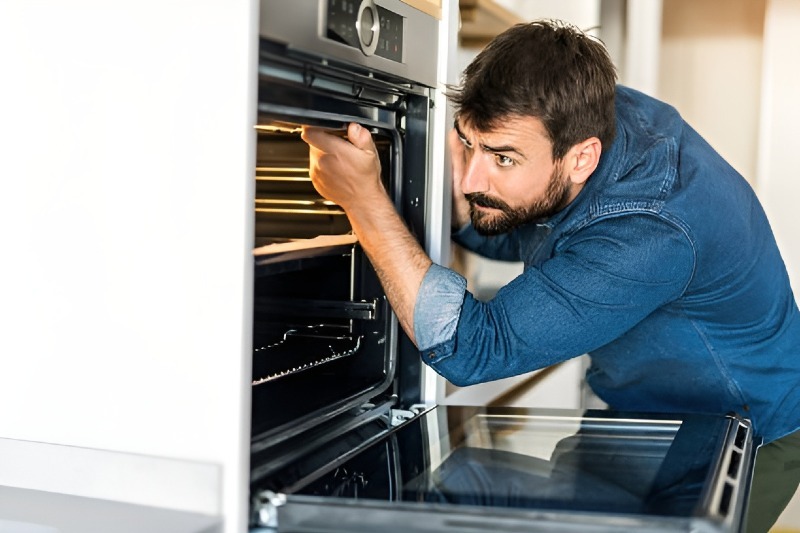
Expert Stove & Oven Repair in Worcester, MA
Appliance Repair for Homes & Businesses in Worcester, Leicester, Cherry Valley, Paxton, Millbury, Spencer, Rochdale, North Oxford, Massachusetts and Nearby Areas
Stove and Oven Repair in Worcester Massachusetts, Appliance Repair Pros
When your stove or oven fails it stops your kitchen in its tracks. Whether you are unable to boil water for pasta or your oven refuses to heat up for a family roast you need a solution that is fast and safe. Appliance Repair Pros provides expert diagnostics and repair for gas ranges, electric cooktops, and wall ovens throughout Worcester and the surrounding communities including Paxton, Leicester, and Millbury. We help you address common issues like burners that will not ignite, ovens that bake unevenly, or error codes flashing on the display.
We know the Worcester area well. From the gas hookups in the triple-deckers on Grafton Hill to the modern electric setups in the newer condos near the train station we understand the local housing stock. Cooking appliances involve high heat, gas lines, and high-voltage electricity so they require a technician who puts safety first. Our approach relies on pinpointing the exact failure whether it is a weak igniter or a faulty control board rather than guessing. We treat your home with respect and focus on dependable scheduling so you can get back to cooking dinner. If your kitchen is out of commission we are ready to assist you.
Contact us today.
Stove and Oven Repair Services in Worcester
Modern cooking appliances are a blend of heavy-duty mechanical parts and sensitive electronics. A gas range uses dangerous fuels that must be managed carefully while an induction cooktop uses complex magnetic fields. We work on the full spectrum of cooking equipment found in Worcester kitchens. Our technicians are experienced with both vintage models that have been working for decades and the latest smart appliances.
Cooking systems we work on
- Gas ranges and stoves
- Electric ranges (coil and smooth top)
- Built-in wall ovens (single and double)
- Gas cooktops
- Electric glass cooktops
- Induction cooktops
- Dual-fuel ranges
- Slide-in and freestanding units
What makes oven repair tricky
- Gas Safety: Working with gas valves, regulators, and igniters requires strict adherence to safety protocols to prevent leaks.
- High Voltage: Electric stoves often run on 240 volts requiring careful handling of electrical circuits.
- Calibrating Temperature: Ovens rely on sensors and thermostats that can drift over time causing burnt or undercooked food.
- Control Boards: The electronics are often located near high heat sources leading to thermal stress and failure.
- Door Locks: Self-cleaning cycles use high-security latches that can jam and lock your dinner inside.
- Hidden Components: Many parts like convection fans or limit switches are buried behind heavy panels.
Common Stove and Oven Problems We Fix
Oven is not heating up
This is the most common call we receive. You turn the dial or press start but the oven stays cold. On a gas oven this is usually a safety feature preventing gas flow because ignition failed. On an electric oven it is often a break in the heating circuit.
Likely causes
- Weak or broken gas igniter (glow bar)
- Burned out bake element
- Tripped thermal fuse
- Defective safety valve
- Control board relay failure
- Incoming power issue (breaker trip)
How we diagnose it
For gas units we observe if the igniter glows. If it glows but does not light the gas it is likely too weak to open the safety valve. For electric units we test the element for continuity and verify the control board is sending voltage.
What you can do right now
Check your breaker panel. Electric ovens run on a double breaker and sometimes only one side trips leaving the clock on but the heat off. Ensure the time of day is set as some ovens will not heat if the clock is flashing.
Gas burner will not light
You turn the knob and hear clicking but see no flame. This is frustrating and forces you to cook on only one or two working burners. It is often caused by a disruption in the spark or gas flow.
Likely causes
- Clogged burner ports (spillover or debris)
- Cracked ceramic spark electrode
- Defective spark module
- Worn out ignition switch on the burner valve
- Moisture in the burner assembly
How we diagnose it
We check if there is a spark at the burner. If there is a spark but no flame we check for gas flow obstructions. If there is no spark we trace the electrical path from the knob switch to the spark module.
What you can do right now
Clean the metal burner cap and the base. Use a needle to gently clear the small holes (ports) where the gas comes out. If you recently cleaned the stove let it dry out as moisture can inhibit the spark.
Oven bakes unevenly
If your cookies are burning on one side and raw on the other your oven is not distributing heat correctly. This can happen in both gas and electric units and ruins the precision of your baking.
Likely causes
- Failed convection fan motor
- Bake or broil element working intermittently
- Temperature sensor (thermistor) out of calibration
- Worn door hinges letting heat escape
- Oven rack placement or calibration settings
How we diagnose it
We test the resistance of the temperature sensor. We inspect the door seal (gasket) for tears or gaps. We also verify that the convection fan is spinning at the correct speed to circulate air.
What you can do right now
Check the seal around the door for damage. Ensure your oven racks are level. Avoid covering the racks with aluminum foil as this blocks airflow.
Electric element is not working
On an electric cooktop a burner that stays cold or only heats on “High” is a major inconvenience. This can apply to exposed coil elements or the hidden elements under a glass top.
Likely causes
- Burned out element or coil
- Loose wire connection at the terminal block
- Defective infinite switch (the control knob)
- Broken limiter (on glass tops)
How we diagnose it
We test the element for continuity. If the element is good we test the switch to see if it is regulating power correctly. If a burner only works on high it usually means the switch contacts have welded together.
What you can do right now
For coil tops make sure the element is pushed firmly into the receptacle. Inspect the element for visible blistering or breaks.
Glass cooktop is cracked
Dropping a heavy pot can crack the ceramic glass surface. This is not just cosmetic; it is a safety hazard. Moisture can seep through the crack and reach the high-voltage components below creating a shock risk.
Likely causes
- Impact from heavy cookware
- Thermal shock from extreme temperature changes
- Installation stress
How we diagnose it
This is a visual inspection. Unfortunately glass tops cannot be repaired with glue or filler. The entire glass assembly must be replaced to ensure safety.
What you can do right now
Stop using the cooktop immediately. Do not cook on a cracked surface. Turn off the breaker to the unit to prevent accidental use until it can be serviced.
Oven door is stuck locked
This usually happens after a self-cleaning cycle. The high heat requires the door to lock for safety but sometimes the latch fails to release when the oven cools down leaving your oven inaccessible.
Likely causes
- Defective door lock motor assembly
- Control board relay failure
- Warped door latch
- Temperature sensor failing to read “cool” state
How we diagnose it
We access the lock mechanism usually from the top or back to manually release it if possible. We then test the motor and the sensor to see why it didn’t retract.
What you can do right now
Wait at least one hour after the cycle ends to ensure the oven is fully cool. Try running a short “Cancel/Off” command to reset the board. Do not force the door open as you will break the latch or the glass.
Gas smell near the stove
The smell of gas is a serious warning sign. It can occur when a valve is slightly stuck open or a connection is loose. This requires immediate professional attention.
Likely causes
- Leaking gas valve or regulator
- Loose connection at the supply line
- Igniter taking too long to light the gas
- Burner knob turned slightly but not to “Light”
How we diagnose it
We use electronic gas detectors and leak detection solution to find the source. We check all internal piping and the regulator.
What you can do right now
If the smell is strong leave the house and call your gas utility. If it is faint check that all knobs are in the “Off” position. Open a window for ventilation.
Control panel shows error codes
Modern ovens display “F” codes when the computer detects a problem. These codes disable the oven until the issue is resolved.
Likely causes
- Stuck key on the touchpad
- Runaway temperature (overheating)
- Sensor failure
- Communication error between boards
How we diagnose it
We decipher the specific code for your brand. We test the component indicated by the code whether it is a sensor, a fan, or the board itself.
What you can do right now
Try flipping the breaker off for 5 minutes to reset the main computer. If the code returns the unit needs service.
Safety Notes for Stove and Oven Issues
Stoves and ovens are potentially the most dangerous appliances in the home if malfunctioning. They combine high heat, flammable gas, and high electrical current.
- If you smell rotten eggs (Gas): This is an emergency. Extinguish any open flames, do not touch electrical switches, leave the home, and call your gas provider or fire department.
- If you see electrical sparks (Arcing): Turn off the breaker immediately. Arcing behind the stove usually indicates a shorted wire which is a fire hazard.
- If the glass top is broken: Do not use it. Liquid can enter the electronics and cause electrocution.
- If the oven does not stop heating: If the oven gets hotter and hotter burning your food turn off the breaker. This is a “runaway” condition often caused by a stuck relay.
- If the unit tips forward: Ensure the anti-tip bracket is installed. This is a critical safety device that prevents the range from falling over if a child climbs on the door.
Brands We Service for Stove and Oven Repair in Worcester
Each manufacturer builds their cooking appliances differently. We understand the specific ignition systems, airflow designs, and electronic controls of the major brands found in Worcester.
Whirlpool family (Whirlpool, Maytag, KitchenAid, Amana)
These are the workhorses of many Worcester kitchens. They typically use a glow-bar ignition system for gas ovens which is reliable but does wear out over time.
- Common issues: Igniters failing to open the gas valve, spark modules clicking continuously, control board errors (F1), door springs breaking.
We carry replacement igniters for these models as they are a common wear item. Diagnosis is straightforward but requires testing the amperage draw of the igniter.
GE family (GE, Hotpoint, Profile, Cafe)
GE ranges are built tough and often feature specific T-shaped igniters. Newer models have complex control interfaces. We are familiar with their gas and electric configurations.
- Common issues: Failed oven sensors causing F3 codes, burned out surface elements, calibration issues, convection fan noise.
Correct diagnosis often involves checking the resistance of the sensor at room temperature to ensure it matches the manufacturer’s chart.
Samsung and LG
These brands offer high-tech features like dual convection and smart connectivity. They rely heavily on electronics and relays. Their glass cooktops often have specific sensor requirements.
- Common issues: Uneven temperature, display failures, knobs breaking, convection fan motor failure, SE or 5E error codes.
We are skilled at testing the low-voltage circuits in these units. Often a temperature issue is actually a relay on the board not sending power to the element.
Frigidaire and Electrolux
Common in many apartments and starter homes in the area. They use a distinct style of control board and often feature hidden bake elements which makes replacement slightly more involved.
- Common issues: Control board shorting out, bake element burning out (hidden under the floor), stovetop surface switches failing.
We know how to access the hidden elements safely to get your oven heating again without damaging the liner.
Bosch and Thermador
These higher-end units require precision. They often use different spark systems and more robust door hinges. Thermador is known for their “star” burners which require specific cleaning and maintenance.
- Common issues: Spark module failure, error codes related to cooling fans, door seal issues affecting baking.
We handle these units with the care they require using the correct schematics to trace faults in their complex wiring harnesses.
Brands We Service for Stove and Oven Repair in Worcester
Each manufacturer builds their cooking appliances differently. We understand the specific ignition systems, airflow designs, and electronic controls of the major brands found in Worcester.
Whirlpool family (Whirlpool, Maytag, KitchenAid, Amana)
These are the workhorses of many Worcester kitchens. They typically use a glow-bar ignition system for gas ovens which is reliable but does wear out over time.
- Common issues: Igniters failing to open the gas valve, spark modules clicking continuously, control board errors (F1), door springs breaking.
We carry replacement igniters for these models as they are a common wear item. Diagnosis is straightforward but requires testing the amperage draw of the igniter.
GE family (GE, Hotpoint, Profile, Cafe)
GE ranges are built tough and often feature specific T-shaped igniters. Newer models have complex control interfaces. We are familiar with their gas and electric configurations.
- Common issues: Failed oven sensors causing F3 codes, burned out surface elements, calibration issues, convection fan noise.
Correct diagnosis often involves checking the resistance of the sensor at room temperature to ensure it matches the manufacturer’s chart.
Samsung and LG
These brands offer high-tech features like dual convection and smart connectivity. They rely heavily on electronics and relays. Their glass cooktops often have specific sensor requirements.
- Common issues: Uneven temperature, display failures, knobs breaking, convection fan motor failure, SE or 5E error codes.
We are skilled at testing the low-voltage circuits in these units. Often a temperature issue is actually a relay on the board not sending power to the element.
Frigidaire and Electrolux
Common in many apartments and starter homes in the area. They use a distinct style of control board and often feature hidden bake elements which makes replacement slightly more involved.
- Common issues: Control board shorting out, bake element burning out (hidden under the floor), stovetop surface switches failing.
We know how to access the hidden elements safely to get your oven heating again without damaging the liner.
Bosch and Thermador
These higher-end units require precision. They often use different spark systems and more robust door hinges. Thermador is known for their “star” burners which require specific cleaning and maintenance.
- Common issues: Spark module failure, error codes related to cooling fans, door seal issues affecting baking.
We handle these units with the care they require using the correct schematics to trace faults in their complex wiring harnesses.
Common Warning Signs and What They Usually Mean
Modern ovens often display error codes, but older ones just act up. Here is what the symptoms usually point to.- F0 / F1 Error: Usually a stuck button on the keypad or a failed control board.
- F3 / F4 Error: Temperature sensor failure. The oven thinks it is open or shorted.
- F9 Error: Door lock failure. The oven cannot secure itself for cleaning.
- Clicking noise but no flame: Wet burner, dirty igniter, or no gas flow.
- Gas smell: Weak igniter (delayed ignition) or a loose valve.
- Burner only works on High: Failed infinite switch. The regulator inside the knob is stuck.
- Oven takes 30 mins to reach 350: Weak igniter (gas) or hidden bake element burnout (electric).
Maintenance Tips for Stove and Oven Owners in Newton
Keeping your cooking appliances clean and maintained is the best way to avoid a breakdown during a holiday dinner.
- Clean spills immediately: Sugary spills on a glass cooktop can pit the glass if left to cool. Wipe them up while warm (carefully).
- Don’t flood the knobs: When cleaning the panel, spray the cloth, not the panel. Water can seep behind the knobs and short out the switches.
- Use self-clean sparingly: The extreme heat of the self-clean cycle is the #1 cause of control board failure. We recommend using it right before a warranty expires or not at all. Hand cleaning is safer for the electronics.
- Check the seal: Periodically check the fiberglass gasket around the door. If it is torn, heat escapes, wasting energy and damaging the knobs above.
- Keep burner ports clear: Use a pin or needle to keep the gas holes open. This ensures a clean, blue flame.
- Calibrate if needed: Most ovens allow you to adjust the temperature offset +/- 30 degrees. Check your manual if you feel your oven runs consistently hot or cold.
- Ventilation: Ensure your range hood is working. Proper ventilation keeps grease from building up on the oven controls.
- Aluminum foil warning: Never line the bottom of the oven with foil. It reflects heat and can melt onto the element or block airflow, ruining the calibration.
Service Area for Stove and Oven Repair in and Around Newton, Massachusetts
We are proud to serve the entire Newton community. From the busy streets of Newtonville to the quiet neighborhoods of Waban, we are your local appliance experts. We cover all the villages and zip codes in the area.
- Newton Center
- Newton Highlands
- Newton Lower Falls
- Newton Upper Falls
- Newtonville
- Waban
- West Newton
- Auburndale
- Chestnut Hill
- Nonantum
- Oak Hill
Zip codes we serve: 02458, 02459, 02460, 02461, 02462, 02464, 02465, 02466, 02467, 02468
Frequently Asked Questions
Why does my gas oven smell like gas when I turn it on?
A slight smell for a few seconds is normal, but a strong smell indicates delayed ignition. The igniter is likely weak and taking too long to get hot enough to light the gas. This releases unburned gas into the oven. We recommend replacing the igniter promptly.
Is it worth repairing a 10-year-old stove?
Stoves and ovens are generally simpler than fridges or washers and have longer lifespans. Repairing a 10-15 year old range is often very cost-effective, especially if it’s just an igniter or heating element. If the control board is dead on an old unit, replacement might be the better option.
Why is my glass cooktop scratched?
Scratches usually come from sliding rough-bottomed pans (like cast iron) across the surface or from salt/sugar granules trapped under the pot. These are cosmetic and don’t affect safety, but cracks do.
Can you calibrate my oven temperature?
Yes, we can test the actual temperature versus the set temperature and adjust the offset in the control board settings. If the variance is huge, we may need to replace the temperature sensor.
Why is my convection fan making noise?
A noisy fan usually indicates a worn bearing or that the fan blade has come loose and is hitting the cover. It gets worse as the metal expands with heat. We can tighten or replace the fan motor.
Do you service dual fuel ranges in Newton?
Yes, we are experienced with dual fuel units (gas cooktop, electric oven). These require knowledge of both gas plumbing and high-voltage electrical circuits, which our technicians possess.
How do I know if my heating element is bad?
If the element has a visible break, blister, or hot spot (one area glowing much brighter than the rest), it is failing. Sometimes it looks fine but has no continuity, which we can test with a meter.
Is there a stove repair service near me in Newton?
Yes, Appliance Repair Pros is locally based and serves all of Newton and the surrounding villages. We can get to your home quickly to address urgent issues like gas burner failures or oven lockouts.
Why won’t my burner stay lit?
This is often a thermocouple issue on older units or a dirty flame sensor. If the sensor doesn’t detect heat, it shuts off the gas as a safety measure. Cleaning the sensor often fixes it.
Can I use my oven if the door glass is cracked?
The outer glass is for heat protection; if it breaks, the door will get dangerously hot. If the inner glass breaks, you should not use the oven at all as heat will escape and damage the door latch and hinges.
Why is my induction cooktop clicking?
Soft clicking is normal for induction as the magnets cycle. Loud clicking or buzzing usually indicates a type of cookware that isn’t perfectly compatible or a loose magnetic coil.
My self-clean cycle locked the door and it won’t open. What do I do?
Wait for the oven to cool completely (at least an hour). If it still won’t open, do not force it. The lock motor may have failed or the sensor may be stuck. We can manually release the latch without damaging the door.
Conclusion
A broken stove or oven disrupts your kitchen routine and prevents you from enjoying home-cooked meals. Appliance Repair Pros offers reliable and skilled cooking appliance repair in Newton, Massachusetts. Whether you are dealing with a cold oven, a clicking burner, or a shattered cooktop, our technicians have the tools and experience to fix it right. We serve homeowners across Newton Centre, Newtonville, and the surrounding villages with respect and professionalism. Contact us today.